Atmospheric aerosols
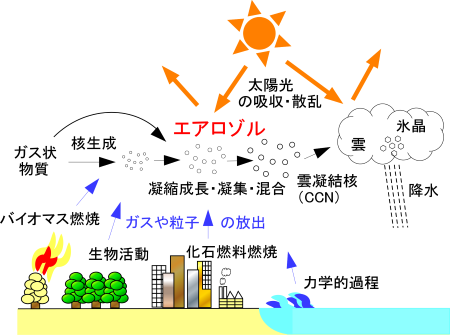
The atmosphere contains tiny particles known as aerosols, ranging in diameter from a few nanometers to approximately 100 micrometers. Although individual aerosol particles are far too small to be seen with the naked eye, they are abundant in the atmosphere, with concentrations ranging from several hundred to tens of thousands of particles per cubic centimeter.
Atmospheric aerosols are closely involved in the Earth's water cycle through their roles in cloud formation and precipitation processes, as well as in the Earth's radiative energy balance through the absorption and scattering of solar radiation. In regions where aerosol concentrations are particularly high, aerosols can also adversely affect human health as a major air pollutant.
Our research approach
Our research aims to understand the diverse sources and formation processes of atmospheric aerosols, as well as the wide variety of their chemical compositions and physicochemical properties. Based on a materials science perspective, we seek to elucidate how aerosols interact with climate and air quality.
To achieve this goal, our laboratory combines two complementary approaches: field observations and laboratory experiments. Through these approaches, we investigate the behavior and characteristics of atmospheric aerosols. By improving our understanding of the impacts of aerosols on climate and air quality, we aim to contribute to a better scientific understanding of climate change and air pollution.
Research topics
Chemical composition of atmospheric aerosols and what it reveals
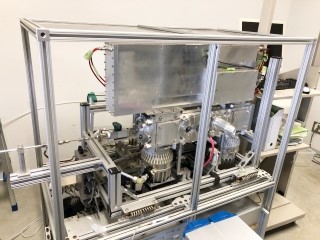
Atmospheric aerosols are emitted into the atmosphere from both anthropogenic and natural sources. They are also formed through the conversion of gaseous compounds into particles. Furthermore, the chemical species that constitute aerosols undergo transformation through chemical reactions while suspended in the atmosphere. As a result, atmospheric aerosols exhibit highly diverse chemical compositions that vary with location, time, and even from particle to particle.
Our research focuses on the chemical composition of atmospheric aerosols, one of the key factors that determines their physicochemical properties. We employ state-of-the-art analytical techniques, including aerosol mass spectrometry (upper right figure), which enables the quantitative analysis of aerosol components present at concentrations of only a few micrograms per cubic meter of air, as well as Fourier transform infrared (FTIR) spectroscopy, to characterize the chemical structures of organic aerosol constituents. We also seek to gain deeper insights into the origins of atmospheric aerosols by taking advantage of the close links between their complex chemical compositions and their emission sources and formation processes.
Hygroscopic properties and cloud condensation nucleus activity of atmospheric aerosols
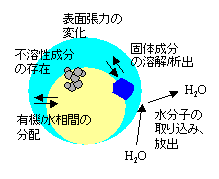
In the atmosphere, aerosol particles take up and release water vapor, repeatedly growing and shrinking in size. This ability of aerosol particles to absorb water (hygroscopicity) is closely related to their capacity to scatter solar radiation and to act as cloud condensation nuclei (CCN), making it one of the key properties for understanding the role of aerosols in climate processes. In addition, since particle liquid water serves as a medium for various chemical reactions, water uptake is also an important process governing the formation and chemical transformation of atmospheric aerosols. However, understanding the hygroscopic properties of atmospheric aerosols is challenging because they contain organic compounds with highly complex chemical compositions, and the chemical composition varies considerably from particle to particle.
We investigate the hygroscopic growth of atmospheric aerosol particles using advanced instruments: a hygroscopic tandem differential mobility analyzer (HTDMA) and a cloud condensation nuclei counter (CCNC). By combining these measurements with detailed analyses of aerosol chemical composition, we evaluate how organic constituents influence the uptake and evaporation of water vapor by aerosol particles. Further, we determine the ability of atmospheric aerosol particles to act as cloud condensation nuclei. Through these studies, we aim to improve our understanding of the water uptake characteristics of atmospheric aerosols and their influences on radiative forcing and cloud formation processes.
Brown carbon and white carbon
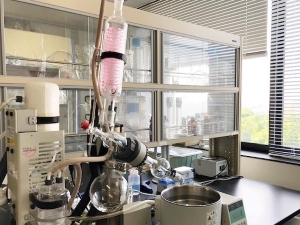
Aerosol components that absorb solar radiation contribute to atmospheric warming by converting sunlight into heat. The most well-known light-absorbing aerosol component is black carbon, but organic aerosol also contains a class of light-absorbing compounds known as brown carbon (BrC). We aim to clarify under what atmospheric conditions organic aerosols exhibit strong brown carbon characteristics or, conversely, behave as nearly transparent white carbon. We also investigate which types of organic compounds are responsible for the light-absorbing properties of brown carbon. To achieve this, we combine solvent extraction of aerosol samples with analyses of their light-absorption properties and chemical structural characteristics. In addition, we study concentrated rainwater samples, which are thought to retain information on cloud water — the medium where aerosol aging and chemical transformation occur — to better understand the formation and evolution of light-absorbing organic matter.
Aging of organic aerosols through heterogeneous and multiphase reactions
Organic compounds in atmospheric aerosols are thought to undergo changes in their chemical composition and properties through reactions with reactive gases in the atmosphere. However, the nature of this aging process and its impacts on the atmospheric roles of organic aerosols are still not well understood. Our group has initiated an effort to investigate the chemical reaction processes involving gas-phase species and aerosol particles using mass spectrometry. A better understanding of these processes is expected to provide new insights into the life cycle of organic aerosols, including how they are formed, grow, and evolve in the atmosphere.
Field atmospheric observations

The Atmospheric Chemistry Research Group conducts field atmospheric observations. To date, we have carried out intensive field campaigns at several locations, including Okinawa and Wakayama (right: Cape Hedo, Okinawa, viewed from the observation site). We have also conducted marine aerosol observations aboard research vessels. Since 2021, we have initiated long-term aerosol sampling at Ny-Ålesund in the Arctic, and are advancing research on atmospheric aerosols in a wide range of environments around the world.
Through these field campaigns, we collaborate with other research institutes to improve our understanding of atmospheric chemical processes. By integrating data obtained from our instruments with observations made by other research groups, we aim to gain deeper insights into aerosol properties and processes that remain poorly understood.
Instruments
Aerosol mass spectrometer
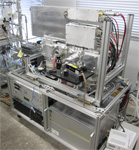 We measure the chemical composition of ambient atmospheric aerosols, as well as laboratory-generated particles generated by atomizing extracts obtained from collected aerosol samples, using mass spectrometry. The resulting mass spectra provide information on the contributions of major aerosol components, including sulfate, nitrate, and organic matter, as well as insights into the chemical structural characteristics of the organic constituents.
Fourier transform Infrared (FTIR) Spectrometer
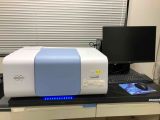 We measure the infrared transmission spectra of atmospheric aerosol particles collected on PTFE filters using Fourier transform infrared (FTIR) spectroscopy. The resulting infrared spectra provide information on the organic functional groups present in atmospheric aerosols and enable the determination of the total organic mass concentration.
Hygroscopicity tandem differential mobility analyzer (HTDMA)
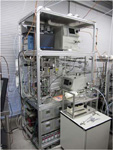 We measure the hygroscopic growth of atmospheric aerosols and laboratory-generated aerosols by monitoring changes in particle size. The instrument characterizes the hygroscopic growth of aerosol particles with dry diameters ranging from several tens to several hundreds of nanometers under subsaturated water vapor conditions.
Cloud condensation nuclei (CCN) counter
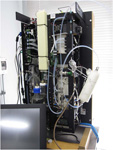 A supersaturated water vapor environment is generated within the instrument column to detect the activation of atmospheric and laboratory-generated aerosol particles as cloud condensation nuclei (CCN).
Ion chromatograph
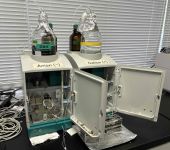 Water-soluble ionic species (e.g., sulfate) extracted from atmospheric aerosol samples are quantitatively analyzed.
Total organic carbon analyzer
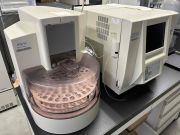 Water-soluble organic carbon (WSOC) extracted from atmospheric aerosol samples is quantified.
| Home |